


REVIEW: Dracula - BIG Live (Ballet International Gala Live), QPAC

Dracula
Presented by: BIG Live (Ballet International Gala Live)
Venue: Lyric Theatre, QPAC
Date Attended: 29 July 2026
Choreographer: Joel Burke
Director: Khalid Tarabay
Original Music: Jason Fernandez and Toby Alexander
Set Designer: Martin Thomas
Costume Designers: Sophia Drakos and Fiona Holley
Lighting Designer: Steven May
Photography: Andre Uspenski
Small spoilers ahead.
BIG Live’s Dracula is for anyone who thinks ballet could use a bit more bite. Joel Burke’s production sinks its teeth in and draws out every drop of theatre it can find - gothic romance, supernatural spectacle, punishing choreography, and enough dramatic cape work to make Elphaba green with envy. It’s easily the most dramatic ballet I’ve seen.

Anyone expecting a page-by-page retelling of Bram Stoker’s story may need to loosen their corset... The novel unfolds through letters, journals, and testimonies, which isn’t particularly helpful when nobody onstage is allowed to speak. Burke creates something quite different. I’d say it’s more like a vampire version of Phantom meets Romeo and Juliet, with a dash of Rocky Horror sneaking around in the shadows.
The story begins centuries before the Harkers decide to vacation in Transylvania. Vlad, a formidable warrior, returns from battle to discover that his wife has been offed by the enemy. In his grief, he sells his soul and turns into Dracula. Overreaction much? Fast forward two hundred years, and newlyweds Jonathan and Mina Harker are gifted a honeymoon at the Count’s castle. It’s a thoughtful gesture, right? Apart from the ghosts, imprisonment, vampirism, and eventual massacre...
The first act begins in considerably sweeter territory. Wedding guests resemble the porcelain dolls from my childhood brought to life, dressed in pale pastels and dainty bonnets, while dashing gents in tails twirl them around the stage. The corps creates a picture of Victorian happiness, blissfully unaware that the evening is heading towards bloodshed. Once the familiar organ chords of Bach’s Toccata and Fugue in D Minor begin, murmurs of happy recognition ripple through the audience.
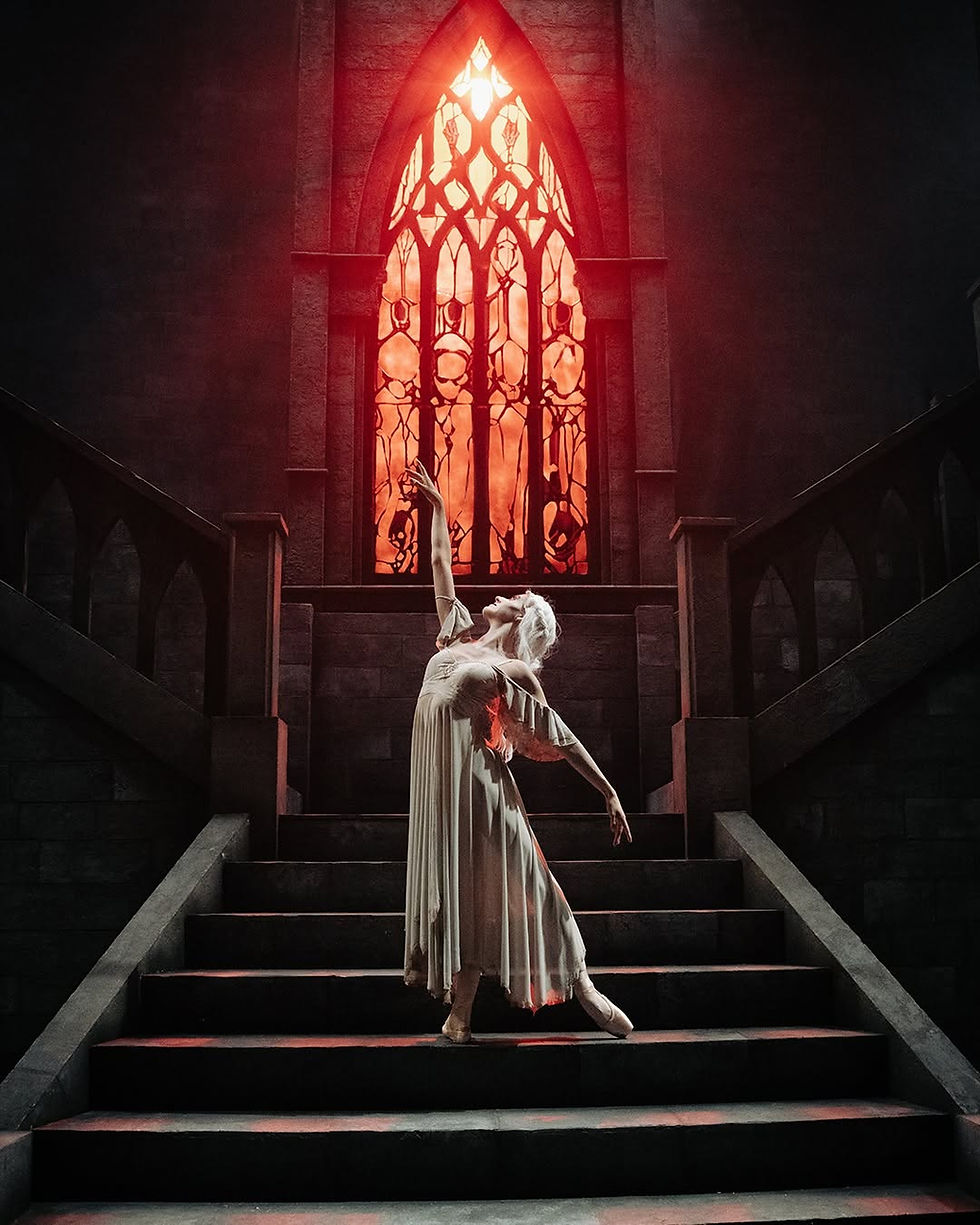
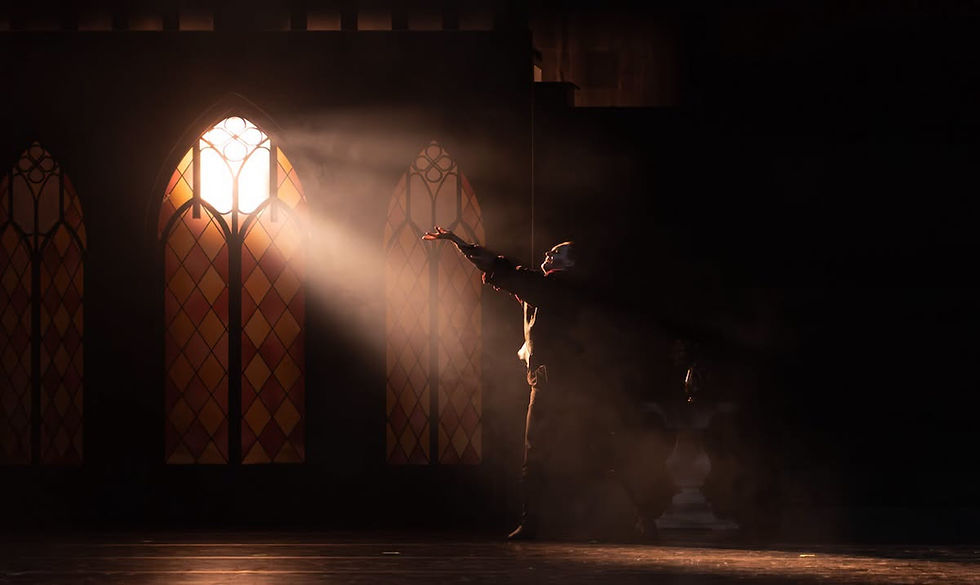
Martin Thomas’ set is a gothic beauty, with painted backdrops, dramatic archways, stained-glass windows, and physical scenery. There are no projections pretending to be walls here. The castle dominates the QPAC Lyric Theatre stage, and the twilight (yeah, I went there) pouring through the stained glass is one of the show's loveliest images. Steven May’s lighting shifts between cold moonlight, blinding white, violent red, and softer washes for the human scenes. Dracula can appear or disappear in a breath, while the supernatural stagecraft remains hidden enough to preserve the magic. Sophia Drakos and Fiona Holley’s costumes are the secret sauce of the storytelling. The designs retain their period detail while allowing the dancers to move freely through demanding choreography.
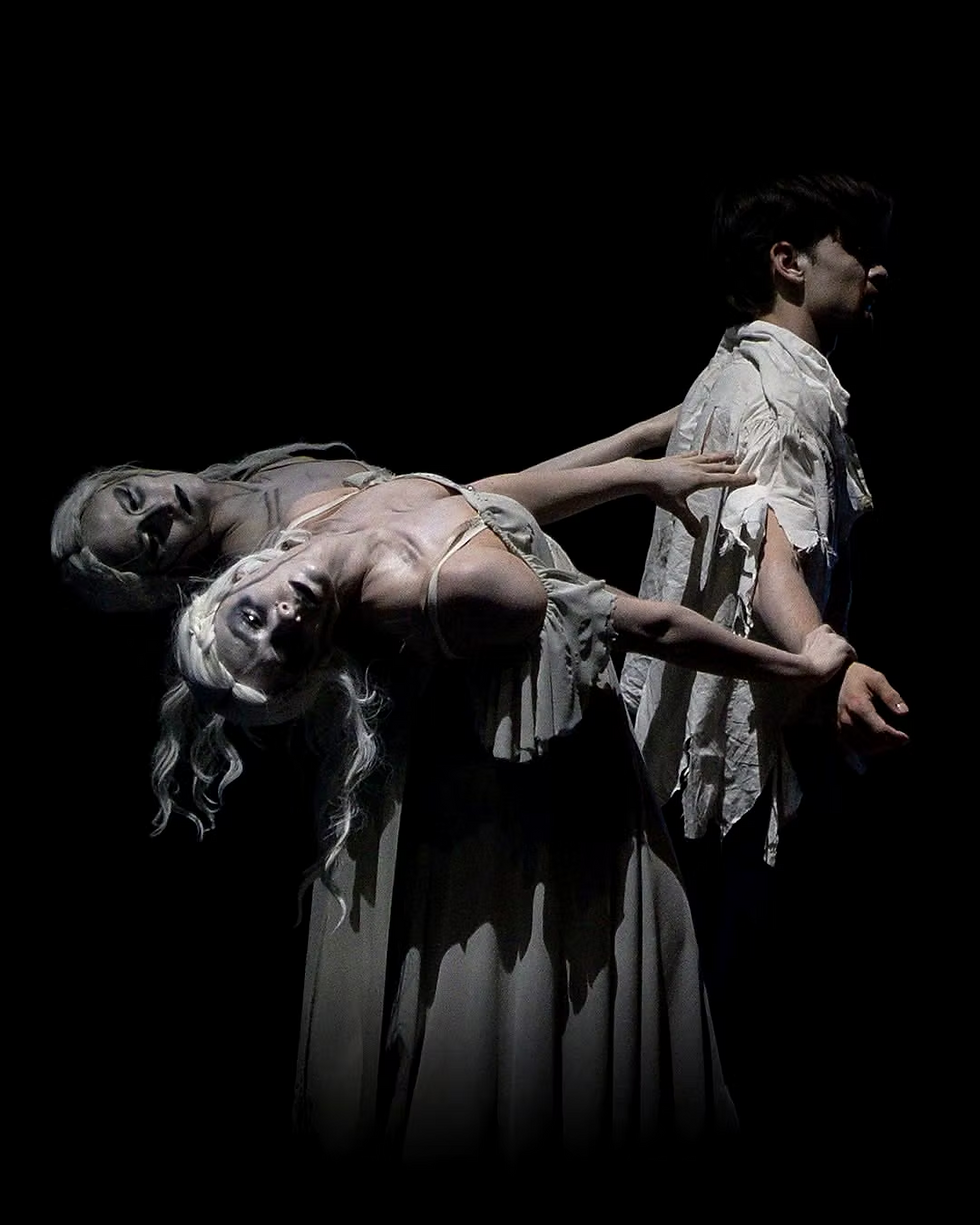
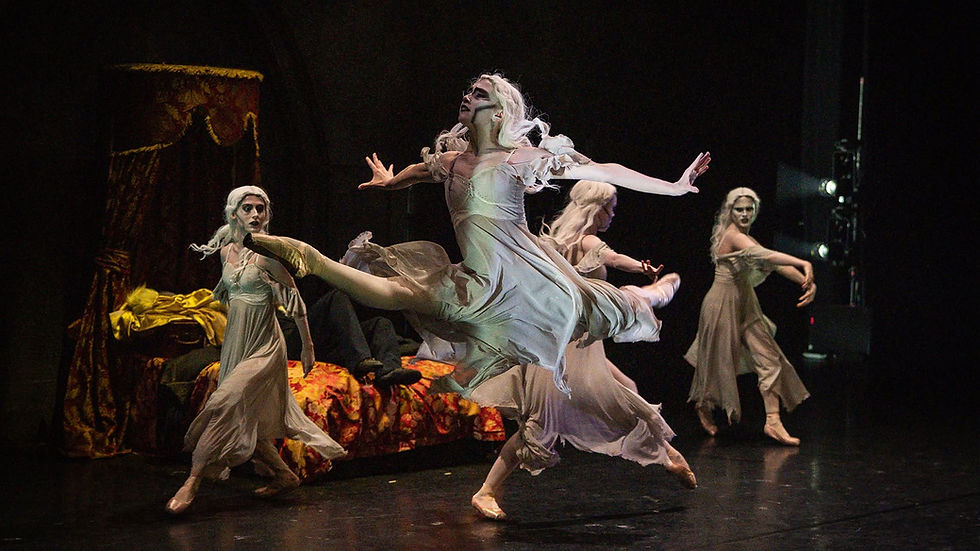
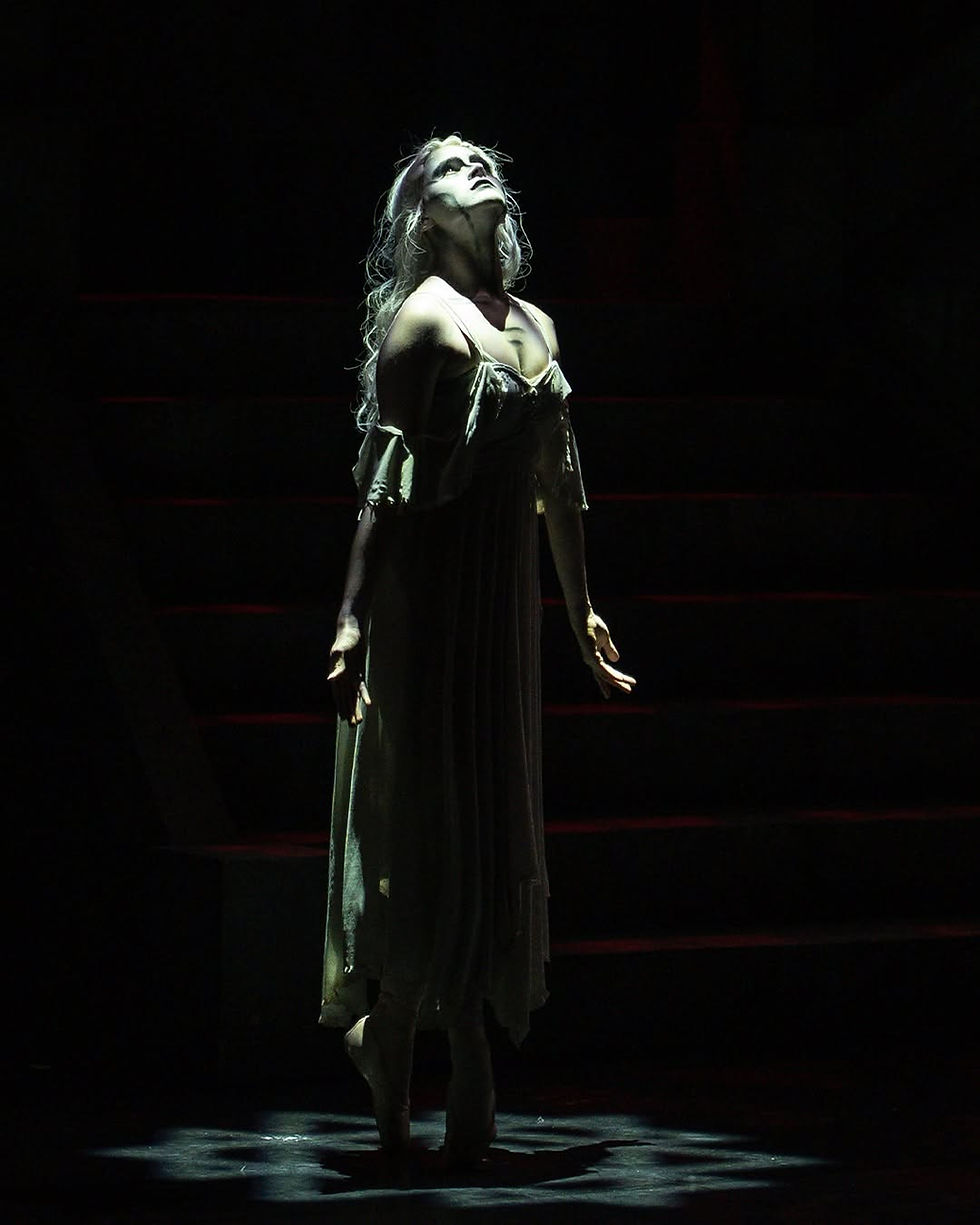
The ghosts wear weathered grey-white fabrics and long pale wigs, giving them a wonderfully dramatic 'Mother of Dragons' appearance. They bourrée across the stage en pointe, weave around one another in exact formations, and attack each sequence with control. Much of their choreography depends on perfect timing. These scenes appear among the most physically demanding in the production, yet the dancers maintain their eerie synchronicity while giving each ghost her own threatening presence.
The choreography asks an enormous amount of its principal dancers. Naturally, Dracula is the epitome of melodrama. Ervin Zagidullan stalks through the castle with a winged cape billowing behind him. Zagidullan moves as though the normal rules of the stage don’t apply to him. He glides like an ice dancer, then launches into the air with the power of a gymnast. He folds inward through tortured phrases to reveal the grief that created the monster. With no dialogue, every look and gesture must do serious work. Zagidullan gives Dracula command, danger, seduction, and despair. Yet, when he sees Mina and mistakes her for his dead wife, we witness a flicker of humanity peeking through.

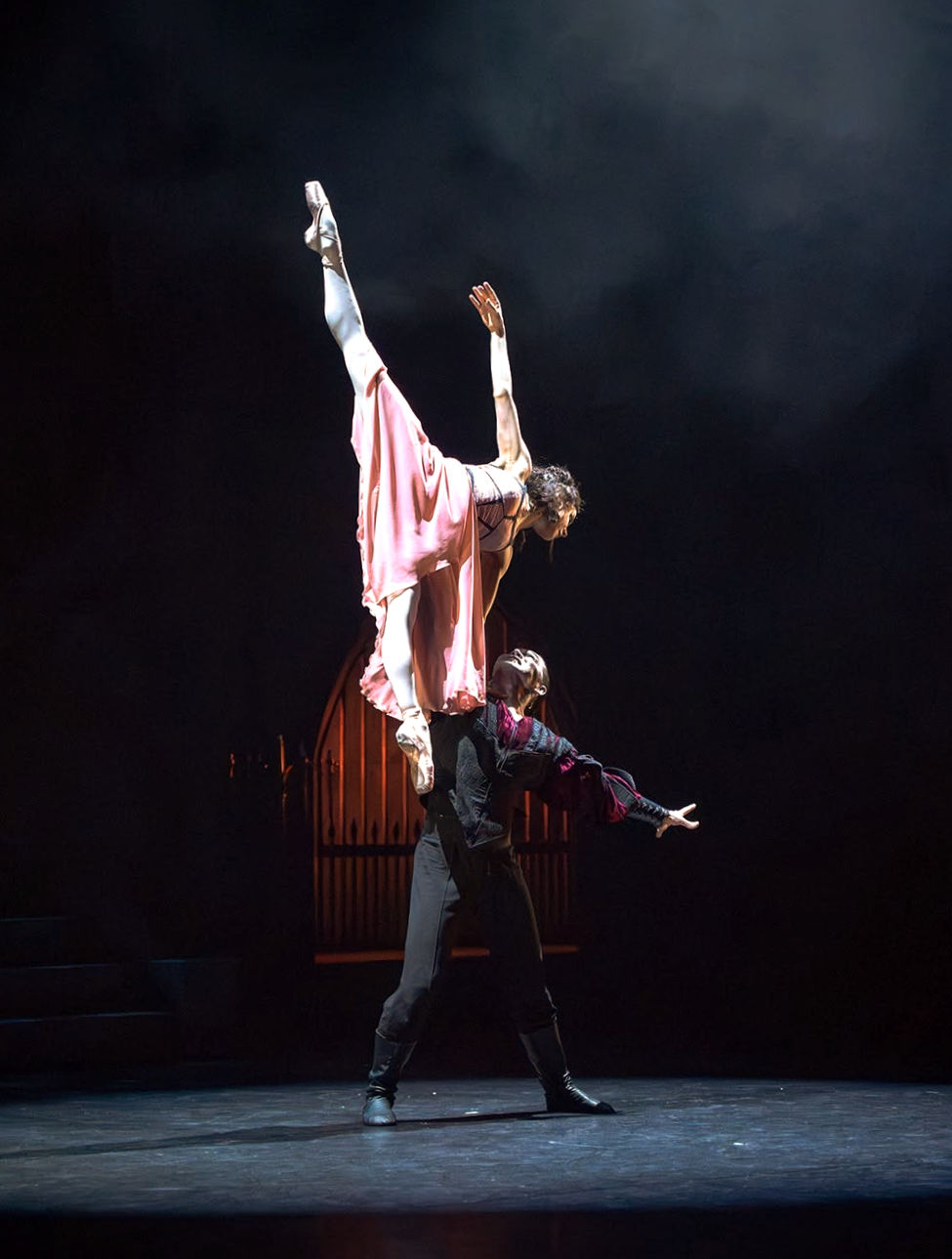
Abbey Hansen as Mina initially brings beautiful warmth, which gradually grows into extreme fear. At the wedding, she flits around with the excitement of a new bride. Inside the castle, her resistance emerges as Dracula’s control closes around her. During their second-act pas de deux to Lacrimosa, Hansen's terror is so apparent that it can be seen from the back of the stalls. She is pulled, lifted, twisted, and carried through challenging combinations, appearing weightless in Dracula's grasp. Hansen's emotional clarity ensures that the beauty of the movement never obscures Mina's horror though.
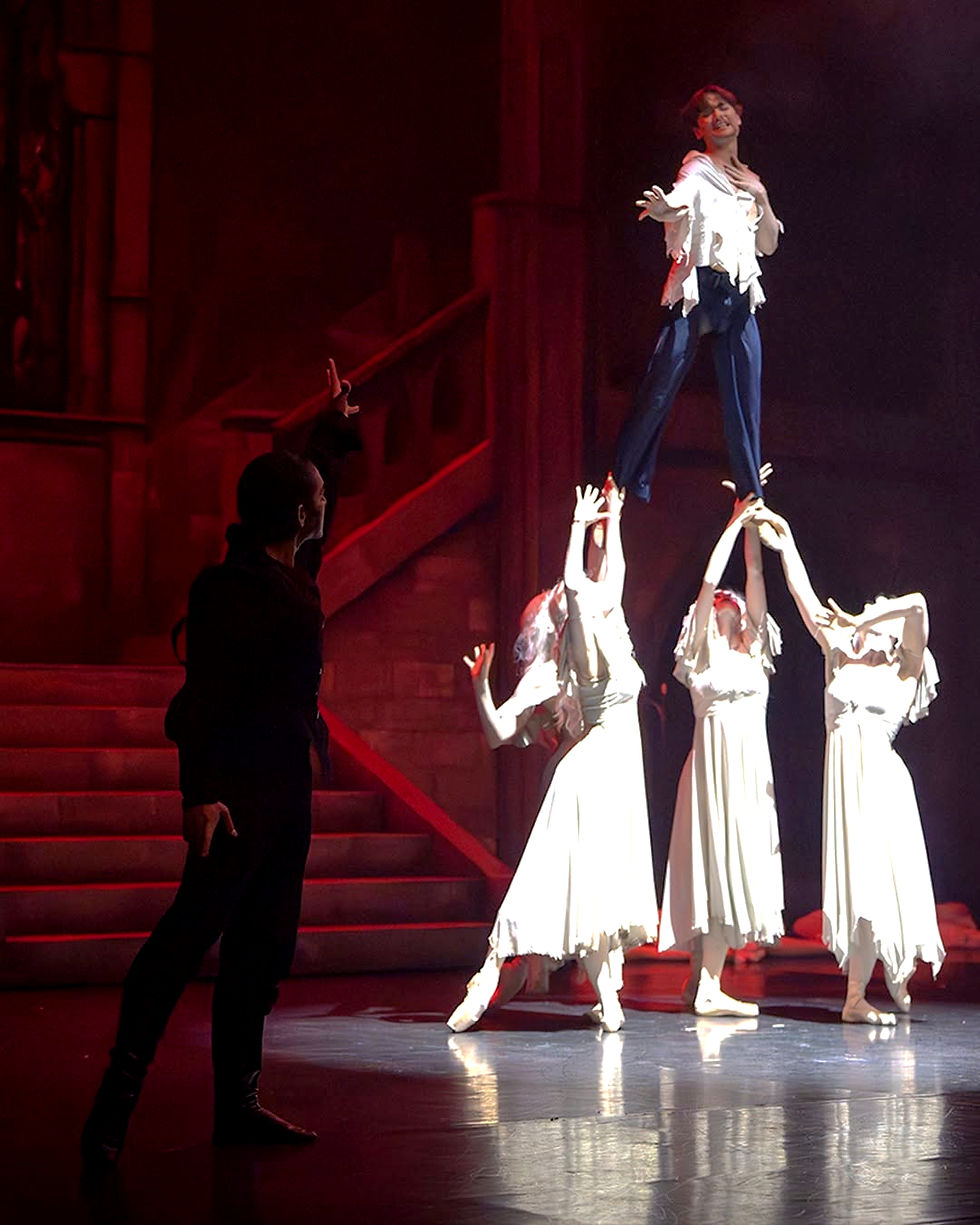
The dancer portraying Jonathan Harker at my performance was a spinning sensation - like he had wheels on his feet! His movements begin with the strength of a romantic lead, then grows frenzied and animalistic after Dracula transforms him. The encounter between Jonathan and Dracula becomes a pas de deux, stage combat, and a supernatural dance-off. They match each other move for move in an epic battle, all set to the thundering force of Dies Irae.
Mina and Jonathan’s honeymoon pas de deux unfolds to Clair de Lune (because apparently all vampires are Debussy fans). It’s tender, with the newlyweds moving through the castle in their own private world. But, surprise, surprise, their romantic escapade gets cut short. Cue the spooky strings, harp, organ, and winds crashing the party, effectively putting a damper on Mina and Jonathan’s steamy moment. Enter the ghostly brides, who emerge from the castle and torment the couple through some of the production’s most imaginative choreography.

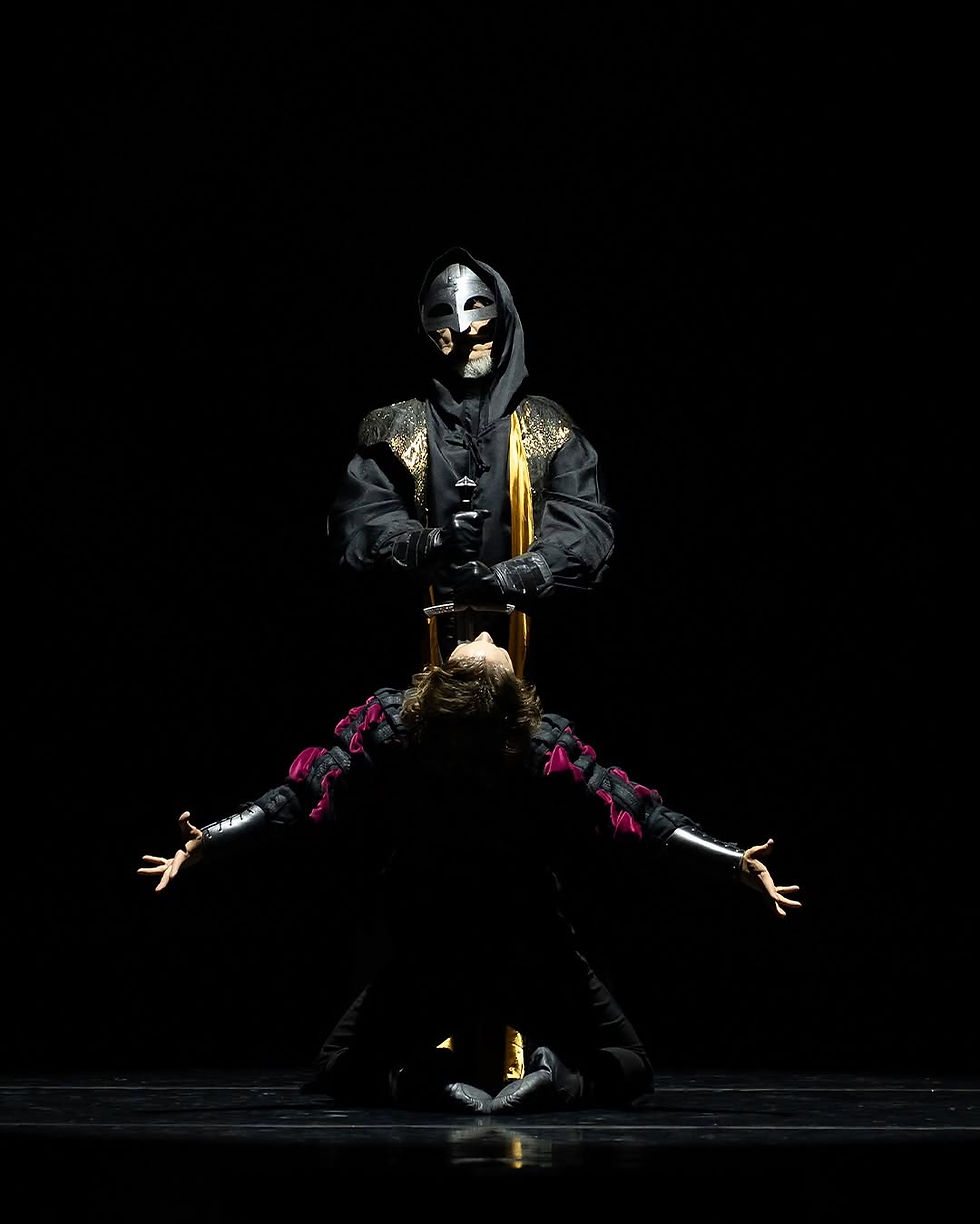
The four ghostly bridal ballerinas unleash a ferocious second-act performance, shifting from elegant lines to predatory attacks. The climax is a whirlwind of flight, combat, blood, sorrow, and sacrifice that had the audience around me gasping. That audience response says a great deal about how well the storytelling works. Ballet can sometimes feel a bit distant for those who aren't fluent in its silent language. But Dracula keeps its central emotions and themes clear (at least to me) through its movement, music, and visual storytelling.

During the break, I overheard someone confess, “I usually get bored during ballets,”with the clear implication that this one had them completely gripped. Joel Burke’s choreography is rooted in classical technique and driven by theatrical momentum. Original compositions by Jason Fernandez and Toby Alexander are woven through familiar repertoire, including Clair de Lune, Liebestraum, Isle of the Dead, Dies Irae, and Lacrimosa. The softer pieces carry tenderness and yearning, while the darker works bring weight to Dracula’s dark world.
The theatrical effects add another layer of drama. Dracula vanishes through perfectly timed lighting, writhes in the sunlight, and defies gravity to fly like a bat. These effects are woven into the choreography, and the audience reacts every time somebody starts levitating. I'm a sucker for stage magic, and this ballet knows when to use it for maximum effect.

There are moments when the plot moves quickly enough to challenge anyone who skipped reading the synopsis. Seriously, learning the summary before the performance will help, especially since this adaptation travels far from Bram Stoker’s original plot. Burke’s reimagining gives the ballet its own identity, using familiar Dracula lore to explore grief, obsession, doomed love, and darkness. It finds fresh visual possibilities within a story that has already been adapted countless times.
BIG Live’s Dracula gives regular ballet audiences plenty to admire, while luring newcomers with a gripping introduction to classical dance. I especially recommend it for those who enjoy a bit of gothic drama, horror, fantasy, or anyone who thinks ballet could use a few more vampires.


Comments