


REVIEW: Her - Brisbane Ballet
Updated: Aug 12
Triple Bill: Glassworks + Rendezvous + One of Those Days
Presented by Brisbane Ballet at QUT Gardens Theatre
Date Attended: 6 June 2026
Choreographed by Rosetta Cook, Arianna Marchiori, Emrys Goldsworthy
Photography by Alisa Poturaeva


Dance has a way of communicating what words often make clumsy. It lets dancers tell stories without handing you the words, which is fortunate, because I am not going to pretend I know ballet terminology beyond the basics. I came to Glassworks + Rendezvous + One of Those Days as someone who appreciates dance more than I can technically explain it, and what I got was three bold, beautifully performed works that made me sit there completely absorbed.


This was not a program that stayed in one lane. 'Her' moved beautifully between three worlds: the sensual tango of Rosetta Cook’s Rendezvous, the pulsing complexity of Arianna Marchiori’s One of Those Days, and the ambitious force of Emrys Goldsworthy’s Glassworks. Rather than presenting female experience as one neat, easily defined thing, the triple bill allowed it to shift shape. It appeared as desire and connection, as repetition and solidarity, and as discipline and transformation.
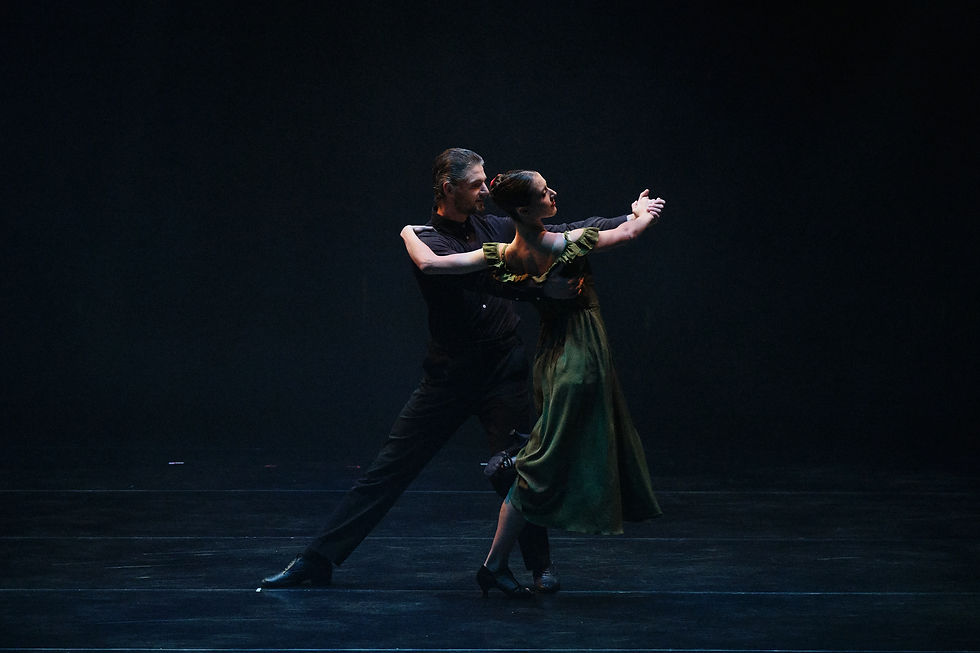
The program opened with Rosetta Cook’s Rendezvous, performed by Lucinda Worthing-Shore and Tynan Wood. Set in the world of Argentinian tango, it carried heat, restraint and elegance, with ballet softening the movement without draining its suspense. The lighting and haze softened the stage into a secretive blur, like a private affair glimpsed through gauze.
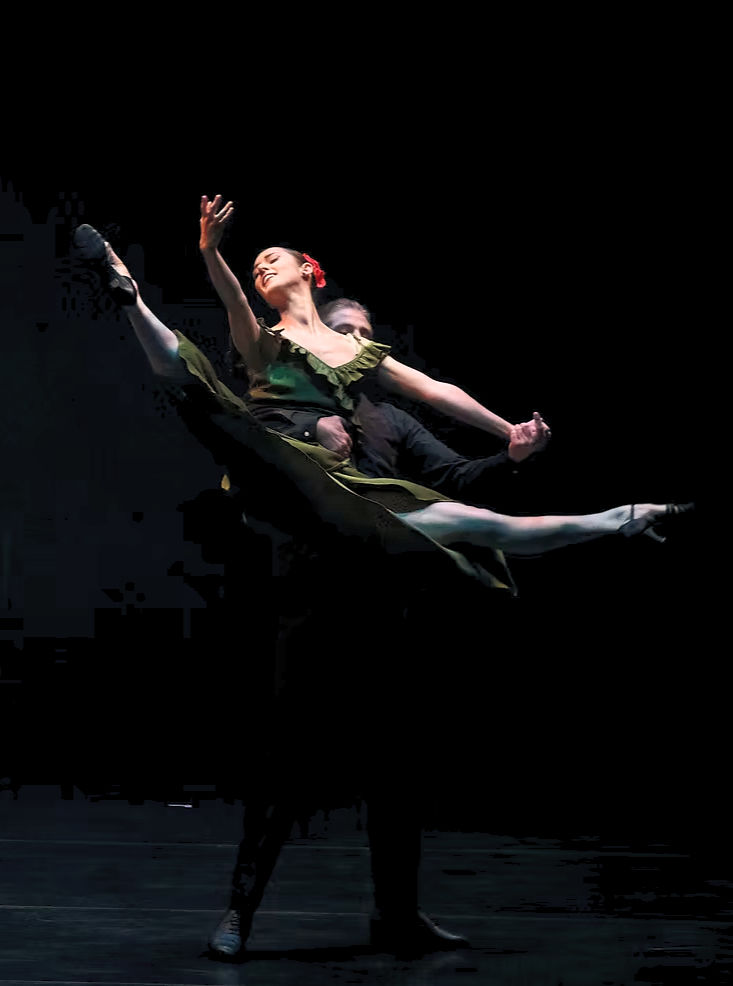
Wood opened with playful nerves, all preparation and anticipation. But that energy changed as soon as Worthing-Shore appeared. She was a stunner in elegance, control and presence. Her heel work was immaculate, and she moved with such confidence that the stage seemed to rearrange itself around her. Though Rendezvous was brief, only two movements, it felt complete. The choreography used chairs, floorwork and close partnering to build sensuality through trust. The lifts had strength without showboating, and there was genuine intimacy between the two dancers.
Arianna Marchiori’s One of Those Days was danced by Hannah Nash, Shanti Barlow, Rebecca Dooley, Maeve Rooney, and Molly Bell. These five women in rusty brown and navy dresses took the stage in socks to create a completely different world for this piece. One of Those Days felt like being dropped inside the nervous system of a group of women trying to get through the day, the week, the body, the expectations, the everything...


It opened with a pulsing beat and a series of tableaux around a table, each one caught for just a few seconds in the spotlight. Those brief images gave flashes of mood and meaning before vanishing. I read them as fragments of girlhood; tiny snapshots of emotion, pressure, performance, fatigue, and defiance. The synchronised work of the dancers was especially striking. These five girls were clearly distinct in style, yet they frequently moved as a single entity. The choreography progressed from fast, sharp phrases, bodies throwing themselves to the floor, to more fragmented sections where they seemed separate and self-contained. Then the distance broke. They carried, held, embraced, and acknowledged each other. That transition from isolation into support was one of the most affecting parts of the piece.

The lighting was stunning throughout this work. Much of it came from wide spotlights above, carving the dancers out of the dark and letting shadows become part of the storytelling. The music, often EDM-like and heavy, thumped around the space and gave the work a restless charge. Some recurring images threaded through the work stayed with me: movements of “lifting yourself up,” sprinting in circles, hints of “three wise monkeys” motif, and poses that startled because of the sheer strength they revealed. Some choreographic moments were unlike anything I had seen before, which is probably both a sign that I should watch more dance pieces and that this work was doing something truly fresh.


For me, One of Those Days travelled through many facets of girlhood and sisterhood. It looked at the internal cycles women move through, but also the external expectations that shape how much of those cycles they are allowed to show. It captured empathy, tension, conformity, exhaustion, resistance, and recognition.
The final and largest work of the evening was Emrys Goldsworthy’s Glassworks, named for composer Philip Glass and set to his hypnotic, orchestral music. Performed by Lucinda Worthing-Shore, Tynan Wood, Rafaela Morel, Rubi Hawkins, Hannah Nash, Shanti Barlow, Rebecca Dooley, Maeve Rooney and Molly Bell, this was an immense work that fused post-classical contemporary dance, pointe work and neoclassical ballet. And look, I am not going to pretend I can technically explain everything I saw. I cannot. What I can say is that Glassworks was wildly impressive!
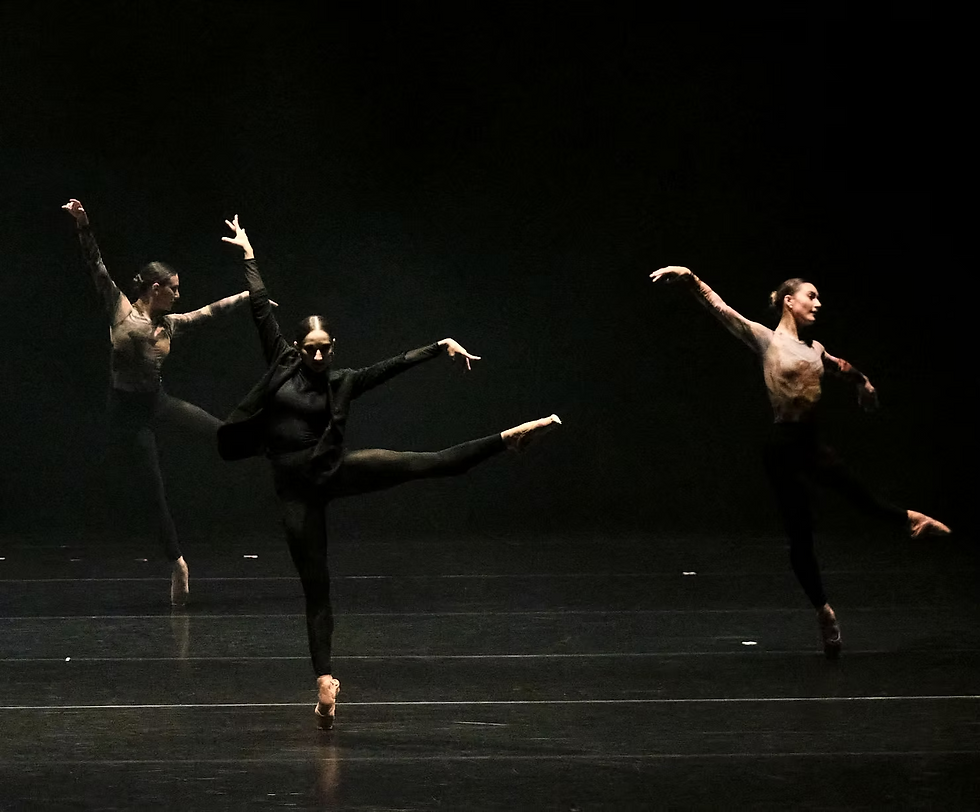
The first movements had a fast, urgent quality that I loved immediately. The dancers hit frame after frame with startling precision, and they did it on pointe! They glided across the stage like they were on ice skates, skimming through space with speed and grace while the music surged underneath them. Rafaela Morel also delivered some truly astonishing moments. I wrote in my notes, “Rafaela does the craziest shit I swear,” and while I should probably phrase that more professionally, the sentiment remains accurate. Her movement had a daring, almost reckless quality, but with the control of someone who knew exactly what she was doing. She seemed to attack the choreography with complete commitment.

One of the most fascinating things about the choreography was how often the dancers moved around each other in entirely different ways. Rather than everyone simply doing the same thing at once, the stage was full of intersecting patterns, separate choreographic ideas, and shifting relationships. Dancers crossed, chased, circled, curved and cut through the space, creating a constant sense of intricate motion without chaos.
As the music calmed, the work shifted. Pointe shoes were shed and replaced with sockettes, opening the door to more contemporary movement. This change altered the whole texture of the piece. It became less about the crystalline sharpness of pointe and more about the body folding, reaching, stretching, contracting and grounding itself. The lyrical variations stood out to me as some of the coolest choreography of the night, paired with some of the most beautiful music. The dancers seemed to use every body part with complete conscious control, down to the smallest ripple or redirection.


Worthing-Shore and Wood were stunning in their pas de deux together, this time in a completely different mode from Rendezvous. I mean just look at these photographs! Instead of tango intimacy, their connection in Glassworks had a chasing quality, like two forces being pulled toward and away from each other across the stage. Their partnering was elegant and athletic, and emotionally charged.

There was no obvious narrative to cling to and there was not meant to be. Glassworks was far more interested in subverting expectations of ballet and pushing the artform into stranger, sharper, more elastic territory. It was ballet, yes, but not the traditional storybook version. It was progressive, athletic and sometimes unhinged... Goldsworthy’s choreography felt like the work of someone determined to stretch, crack, twist and reassemble the body in every conceivable way. I mean that as a compliment, though I am not sure the dancers’ hamstrings would agree!
Together, the works made for a rich and varied performance. The program did not flatten female experience into one neat idea. It let womanhood arrive in contradictions: passionate and powerful, tired and vulnerable, soft and strong, connected and distant, beautiful and unstoppable, disciplined and wild.




Comments