


REVIEW: Long Gone Lonesome Cowgirls - Ad Astra Theatre
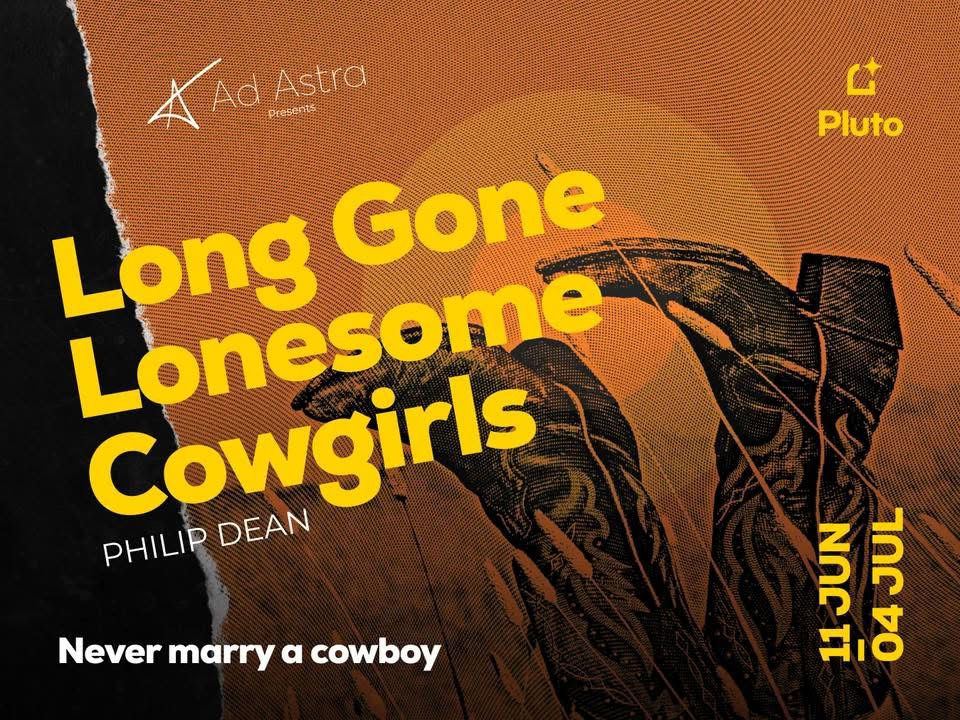
Long Gone Lonesome Cowgirls
Presented by Ad Astra
Written by Philip Dean
Directed by Prue Robb
Music Direction by Meg Kiddle
Set Design: Prue Robb
Costuming: Erin Lowry
Lighting Design: Dan Endicott
Sound: Danielle Park
Photography: Kris Anderson - Images by Anderson
“A good friend is better than a husband. And more reliable!"
Brought to you by Ad Astra, Long Gone Lonesome Cowgirls is a heartwarming two-hander about lonely women and unreliable men. Written by Philip Dean, it first hit the stage at La Boite back in 1995, and it still has that distinctive Queensland feel, making it a perfect fit for Ad Astra’s black box theatre, Pluto. With a soundtrack full of Hank Williams, the play has country music flowing through its veins. Good thing I wore my Texan cowboy boots... Theatre demands commitment, folks!

In a small outback town during the 1960s, a young Catholic housewife and a no-nonsense barmaid are dealing with similar relationship issues, despite their wildly different personalities. Vicki is at home taking care of her baby while her husband is always on the road, and Rae is already fed up with her new cowboy husband, Earl. One is restless, the other is stuck, but both strive to create a fulfilling life from what the men around them have failed to offer. When Rae gets abandoned in town, she crashes at Vicki's place (after sweetening the deal with some rare vinyl records), picks up a bartending gig, and starts dating around the local scene. They quickly hit it off in that special way women sometimes do when life throws a curveball. They drink Jim Beam, play dress-up, sing “Crazy,” and form a sister-like bond. Together, these two women navigate life's highs and lows.

The setup (design by Prue Robb) gives off an old-school Aussie country hall feel. You've got vintage posters, homely 60s décor, vinyl records, and a live band right inside the world of the play. The piano, drums, and guitar are not simply accompaniment; they make the whole space come alive. especially love the detail of Vicki’s American-obsessed secret cupboard. She may be living in a tiny Qld town, but mentally she's halfway to Nashville, chatting away to her framed photo of Hank Williams like a teen with a celebrity poster on her wall. Some things never change... like having a hopeless crush on a musician. We’ve just traded Hank Williams for Harry Styles.


Cheney Hossack gives Vicki a sweetness that makes her easy to love from the start. She's got her head in the clouds, romanticising America and frontier wives as though they might offer her a doorway out of her dull, sheltered life. Always imagining her marriage could be something grander than it is. Hossack’s lovely singing voice suits that softness, while still letting us see the frustration simmering beneath it. And Vicki is certainly no fool. She’s not getting the appreciation or love she deserves, and she’s starting to see that the issue isn’t that she “expects too much.” Nah girl. You expected the bare minimum, and even that was apparently too ambitious.

Isabel Kruse makes Rae impossible to ignore from the moment she arrives. She's got a voice that could send a beer flying off a pub table and a gritty confidence that makes the line “You sayin’ I’m not f*ckin’ refined?” land exactly as it should. But underneath her bluntness and tough exterior, there's a woman bruised by disappointment, and Kruse lets that hurt surface during her solo “Walking After Midnight.” It's one of the standout musical moments, full of real heartbreak. She doesn’t even need a mic for that song (which is lucky because it wasn’t working!)


The script uses that dry Aussie humour that does not need to announce itself. What could easily become a string of ordinary domestic scenes instead becomes surprisingly engaging, because the writing and performances give every situation something to play with. The structure moves quickly across multiple years, and I really enjoy that we only see the story through the lens of these two women. Husbands come and go, babies arrive, brothers complicate things, neighbours gossip, and yet these people around them exist through conversation alone rather than appearance. The stage belongs firmly to Vicki and Rae. These women are learning that no cowboy, contractor, musician, brother, or fantasy man is coming to rescue them. But they do have each other, and eventually, they find themselves too.


Prue Robb’s direction keeps the story moving well, with clear affection for these women and their world. The pacing lets the emotional shifts hit home without turning the whole thing into a misery rodeo. Rae’s monologues from the rolling bar help give context to her life outside Vicki’s kitchen, while Vicki’s phone calls with her husband remind us of the marriage she is trying to make sense of. The kitchen set is functional and well-used as a grounded domestic centre. Given the limits of a black box space, I can understand why the band is tucked around the corner, though I do wish they were a little more visible as such a key part of the production’s world. There were also a few times, particularly on stage left, where some conversations are directed towards the wall instead of the audience. The hospital scene after Vicki gives birth is the main moment where I found myself wanting a clearer view of their faces.

The country songs arrive in neat little bursts, never overstaying their welcome and always giving the women something they cannot quite say in plain conversation. The band, led by Oscar Lowe on piano as assistant musical director, sounds fantastic. Plus, Oscar gets a few chances to shine vocally, which is great to see. Erin Lowry's costume work gives Rae a short visual journey, from wearing flannels and denim shorts to rocking those bright 60s dresses. Her outfits show how Rae goes through different phases of reinvention. On the other hand, Vicki's look pretty much stays the same, with the same demure dresses and hair across the years. Rae changes because she wants to keep moving forward, while Vicki stays in the same domestic loop.


The production also balances its comedy with some heavier 1960s context. Around Vicki and Rae’s personal dramas, Australia is shifting too - feminism, contraception, conscription, and Vietnam all pressing in at the edges. It gives the story more substance without turning it into a history lecture. When the reality of the war comes knocking, Vicki’s reaction lands with a jolt. By that point, these women are dealing with more than just lousy husbands and lonely nights. The whole country is shifting around them, for better or worse.

Long Gone Lonesome Cowgirls understands the strange miracle of being found by the right friend at the right time. Vicki and Rae don't magically fix each other’s lives, but they give each other a place to share their loneliness. Ad Astra’s production shines because of the two performers who make every moment of that friendship feel real, from the first spark of connection to the ache of being apart. This is friendship as a lifeline: messy, musical, slightly tipsy, and held together by someone who loves you enough to welcome you back when you finally ask for help.



Comments