


REVIEW: Lovesong - All Entertainment, PIP Theatre

Lovesong
Presented by: All Entertainment
Venue: PIP Theatre
Date Attended: 31 July 2026
Writer: Abi Morgan
Director: Harrison Allen
Movement Director: Indiah Morris
Lighting Designer: Noah Milne
Composer: Hannah Page
Pianist: Mattea Page
Stage Manager: Megan Dale
“The world changes, and you with it. It’s inevitable.”

Forty years of marriage might seem enormous when you count all the anniversaries, birthdays, vacations, and major life decisions. Abi Morgan’s Lovesong measures it by the number of cups of tea shared, the chores that never end, those inside jokes, the squabbles, the TLC, and the annoyance of having someone permanently in your space.
Directed by Harrison Allen, this production follows one couple at opposite ends of their life together. Anna-Rose Van Der Wiel and Connor Costin play Margaret and William in their younger years, while Nicky Whichelow and John Stibbard portray Maggie and Billy after four decades together. Both versions occupy the stage, observing, remembering, and occasionally reaching across time as their past and present selves overlap. It’s a beautiful premise with a great deal packed inside it. There are no villains, enormous revelations, or conveniently manufactured disasters. We’re watching the smaller moments that gradually become a marriage.

The stage design immediately had me in awe. A peach blossom tree stretches above the space, surrounded by grass, ferns, and bright flowers. Lanterns hung among its branches, while the couple’s bedroom and kitchen sat within this indoor garden. Mattea Page was also visible at the piano, nestled among the greenery and incorporated into the world rather than hidden away as accompaniment.
Within the home, small handwritten notes have been taped up, providing reminders for tasks like washing clothes and eating. The house embodies forty years of shared routines, while the surrounding garden lends the production a storybook ambiance. Imagery is projected onto the three bare walls, featuring literal birds or transitioning into dreamlike memories. This is further enhanced by Noah Milne’s lighting, Hannah Page’s composition, and the live piano/foley work.

The production fittingly opens with young Margaret singing us a love song. Anna-Rose Van Der Wiel imbues Margaret with an excitable curiosity, whether she's discussing books, imagining their future, or trying to convince William of anything. There’s an immediate warmth to Van Der Wiel’s performance that makes Margaret extremely easy to like, even when she’s being stubborn or exasperated. Her enthusiasm gives the younger timeline much of its lightness, while she still allows the occasional storm clouds of disappointment and frustration to gather beneath that sunny exterior.

Connor Costin as young William was playful, affectionate, and occasionally infuriating. His teasing gave their relationship plenty of warmth, while his drinking and flirtations exposed some of the selfishness Margaret had to handle. Costin managed to present these flaws without making William a character we would dislike. He was youthful, restless, and often uncertain about what would be enough to satisfy him in life.
The question of children sits quietly inside their early years of marriage. Their infertility shapes their future, although the production doesn’t treat their life as empty. Margaret and William eventually build a life around their friendships, pets, reading, gardening, work, and one another. They spend their younger years globe-trotting and later return to those memories with affection. Side note: as someone very firmly positioned on the cat side of that children-vs-cat debate, I understood Margaret’s logic of wanting "something to take care of."

Nicky Whichelow spent much of the production in pjs and a dressing gown, giving Maggie a physical vulnerability from the beginning. Her performance focused on subtle behaviours. She would frequently rub her head, fret over practical matters, and attempt to organise the end of her life while still managing Billy’s emotions. Her fear remained present, but so did her personality. Maggie didn’t become a symbol of illness. She remained the same intelligent, caring woman we had already met.
John Stibbard as Billy portrayed a gentle, humorous, and quietly devastated character. He was there for Maggie, all the while carrying an anger he couldn’t comfortably place anywhere. She wanted him to prepare for life as a widower, but he had no interest in imagining a version of himself that continued without her. Stibbard initially managed this inner conflict with restraint, letting Billy’s frustration at the situation emerge through shifts in mood, tone, and attention.
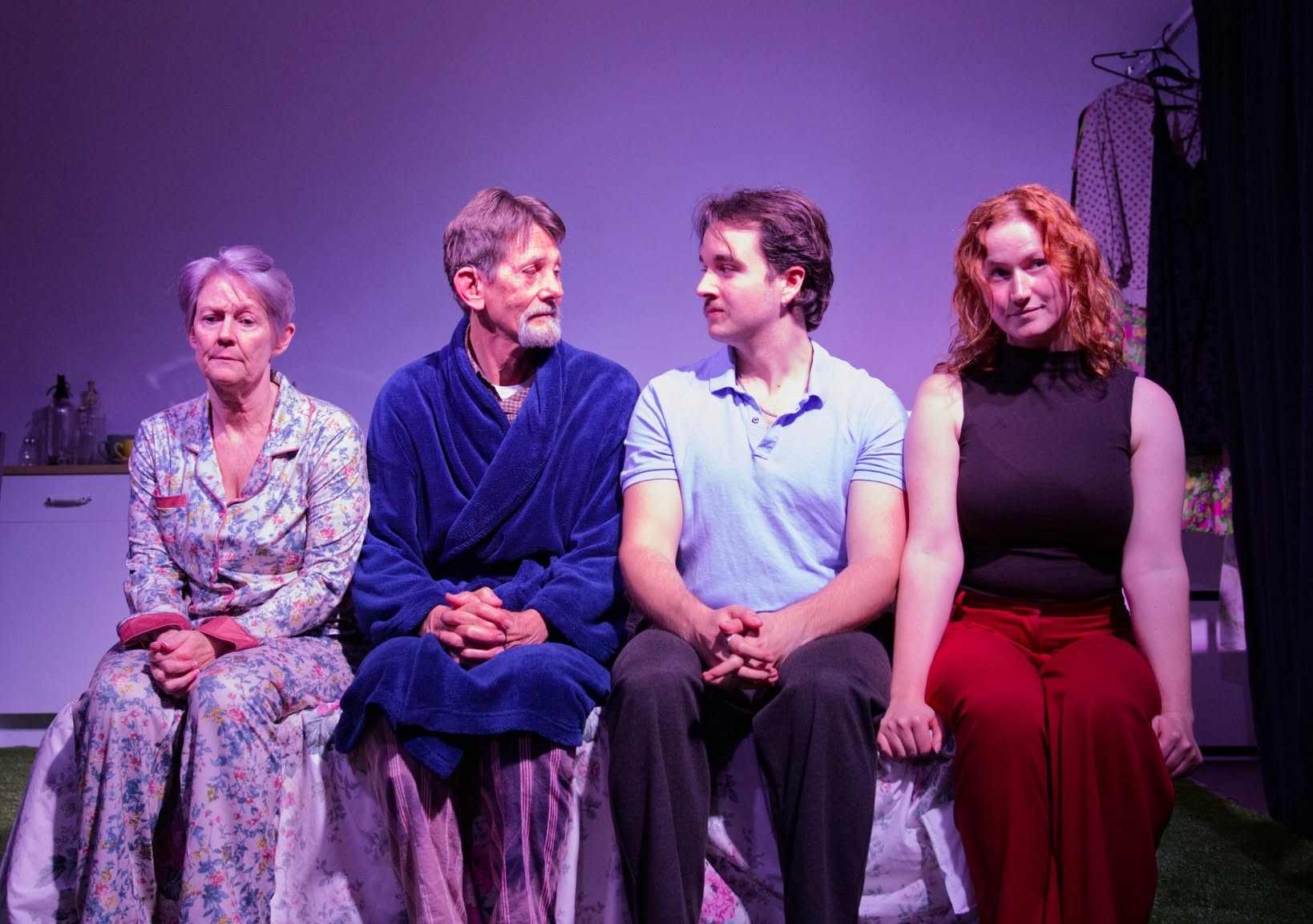

The chemistry between both couples was carefully developed. Van Der Wiel and Whichelow shared enough physical and emotional nuance to register as the same character, as did Costin and Stibbard. Their connection emerged through similar rhythms, accents, humour, and responses to their partner. Billy's teasing of Maggie created some of the production’s warmest moments. Across both timelines, Billy/William knew exactly how to irritate their partner, and exactly how far they could push before retreating.

Harrison Allen’s direction moved comfortably between comedy and sorrow, finding plenty in both the challenges and joys of sharing a life with someone. Both couples encountered difficulties specific to their stage of life, while many of the arguments and compromises were immediately recognisable to anyone who has spent years in a partnership (or so I am told). There is a great deal the script never directly explains. We see selected fragments from forty years, then fill the spaces between them ourselves. That absence is part of what makes the story so affecting. We understand that there were thousands of breakfasts, arguments, reconciliations, illnesses, and restless evenings beyond those chosen for us to witness.

Indiah Morris’ movement direction was essential to the production’s handling of time. The four actors moved around, through, and towards one another as the timelines collided. At times, a younger character would support or embrace their older counterpart. Elsewhere, one might appear to occupy the memory of the other. These sequences flowed naturally from the scenes, giving physical form to thoughts and histories that Abi Morgan leaves unspoken.
Watching both timelines unfold together gives us two very different perspectives on the same marriage. It considers legacy, selflessness, ageing, and the reality of growing older while still carrying every previous version of yourself. This production approaches those ideas with imagination and considerable tenderness. Its visual world is adventurous, its performances invite plenty of empathy, and its humour prevents the play from sinking beneath its subject matter. It’s a portrait of a long relationship built from small, beautiful pieces.


Comments