


SPOTLIGHT INTERVIEW: Dracula - Ghostlight Theatre

Taking a Bite Out of Dracula: Inside Ghostlight Theatre’s Bloody New Production
I recently had the opportunity to attend a rehearsal for Ghostlight Theatre Company’s Dracula. Reagan Warner, portraying the Count, already seemed entirely at ease embodying evil.
He observed Van Helsing with a faintly amused, knowing expression, as if Dracula relished just how badly outmatched everyone else was. Warner's low Transylvanian accent added to the menace, complemented by the red eyes, dark features, and some truly wild eyebrow acting. This is not a tragic, glittery vampire lover.
Ghostlight Theatre Company is bringing William McNulty’s stage adaptation of Bram Stoker’s Dracula to Beenleigh Theatre for just four performances this October. Yasmin Elahi is producing and directing, while also handling set, costume, and lighting design. She is supported by a talented team: Tomm Burnett as Assistant Director, Dan Pohlmann as Fight Choreographer, Sarah Latter as Choreographer, Christina McMahon as Stage Manager, and Charlotte Horn in charge of SFX Makeup. This dedicated team has much to manage, including fight choreography, blood effects, prosthetic makeup, physical transformations, stunning set pieces, a complex soundscape, ballroom dancing, and even a performer on stilts.

Which version of Dracula are we getting?
For over a century, Dracula has been everything from a fanged monster and mysterious aristocrat to a seductive antihero, a children’s character who runs a hotel, a classic Halloween costume, and even... Nicolas Cage.
Based on Bram Stoker’s 1897 novel, Dracula follows the Count’s arrival in England and the gory consequences for those unfortunate enough to cross his path. As Lucy and Mina fall within his sights, Professor Van Helsing and his allies begin to work out exactly what they’re dealing with and how they might stop him. McNulty’s adaptation condenses Stoker’s sprawling epistolary novel into something more manageable for an evening at the theatre. This is probably wise. “We’d be here for 12 years if we tried to do the whole novel,” Warner says.
Ghostlight chose this adaptation because of one important distinction. “Because it was the only one that we found that was classed as a horror and not a gothic romance,” Warner explains. “Part of the idea behind this particular production is to make it disturbing and macabre without adding too many of the romantic elements.”
So anybody hoping Dracula and Mina might stare tragically into one another’s eyes while contemplating their forbidden eternal love may need to adjust their expectations. There is desire, Warner explains, but love is another matter. “He’s absolutely not capable of love in this one. Absolutely not.” Warner likens this Dracula more to Nosferatu. He’s predatory, grotesque, and ravenous, but there’s still plenty of personality beneath the fangs.

I noticed that in the scene where Van Helsing first meets the Count. Warner shifted from a mysterious, almost amused host into something far more aggressive, while Andrew MacArthur’s Van Helsing held his ground firmly. MacArthur brings a calm authority to the scene, which only seems to encourage Dracula to provoke him harder. “There’s so much gravitas to that role that Andrew brings,” Warner says. In the other scene I watched, Harker and Van Helsing confronted Dracula with a crucifix. Instead of recoiling as expected, Dracula mocked them and kept pushing until the encounter turned physical. And it got loud and bloody very quickly.
How do you play a vampire without making him sexy nowadays?
“I get to eat so many people,” Warner told me, sounding very pleased with himself. “There’s quite a body count in this show. I pity the poor sucker who’s got to mop the stage afterwards.”
Anyone who knows Reagan Warner will know that Dracula isn’t exactly a wild casting departure. He wears almost exclusively black, has long joked about sleeping in a coffin, and has been a fan of the macabre for most of his life. Actually playing Dracula, however, has required more than turning up in his usual wardrobe.

“Horror is so difficult,” he says. “The preparation predominantly comes down to how the audience is going to perceive the show. I have to think about how the audience is going to experience it and make sure that it is being conveyed properly.”
Much of Warner’s work has gone into Dracula’s voice. “We have discussed the accent at length,” he says. “I think that the accent is inherently a part of the character and his origin. It is probably something I spent the most time on.” Warner is a linguist and admits to being particular about accents. That same attention runs through the production, with the cast looking closely at regional voices, clothing, physicality, and the relationships between their characters.
How to freak out an audience without touching them?
Ghostlight’s horror plans aren’t confined to bites and blood. Warner says the production uses sensory details designed to unsettle an audience before they quite realise why.

“It’s one of the rare shows that employs Theatre of Cruelty techniques,” he explains. “Things that play with the audience, make the audience feel uncomfortable subconsciously, things like scent and sound that you don’t realise is there until it stops, and special effects that will toy with the psychology of a person.” Yes indeed, scent. I sought further clarification but was advised to wait and see.
Ghostlight’s soundscape combines classical music, layered voices, unsettling effects, and, naturally, bats. The familiar Toccata and Fugue appears, along with a nod to Swan Lake, which Warner points out plays at the beginning of the classic Bela Lugosi Dracula. “The atmospheric sound has been a big part of this and a big focus, and I think they’ve done a really good job so far.”
Sound can tip into haunted-house territory if every entrance, scare, or suspicious moment comes with its own musical exclamation mark. From what I heard in rehearsal, Ghostlight avoids that. The sound designer was constantly tweaking cues, replaying sections, and layering sounds while scenes were being worked around them.
Who is going to clean this up?
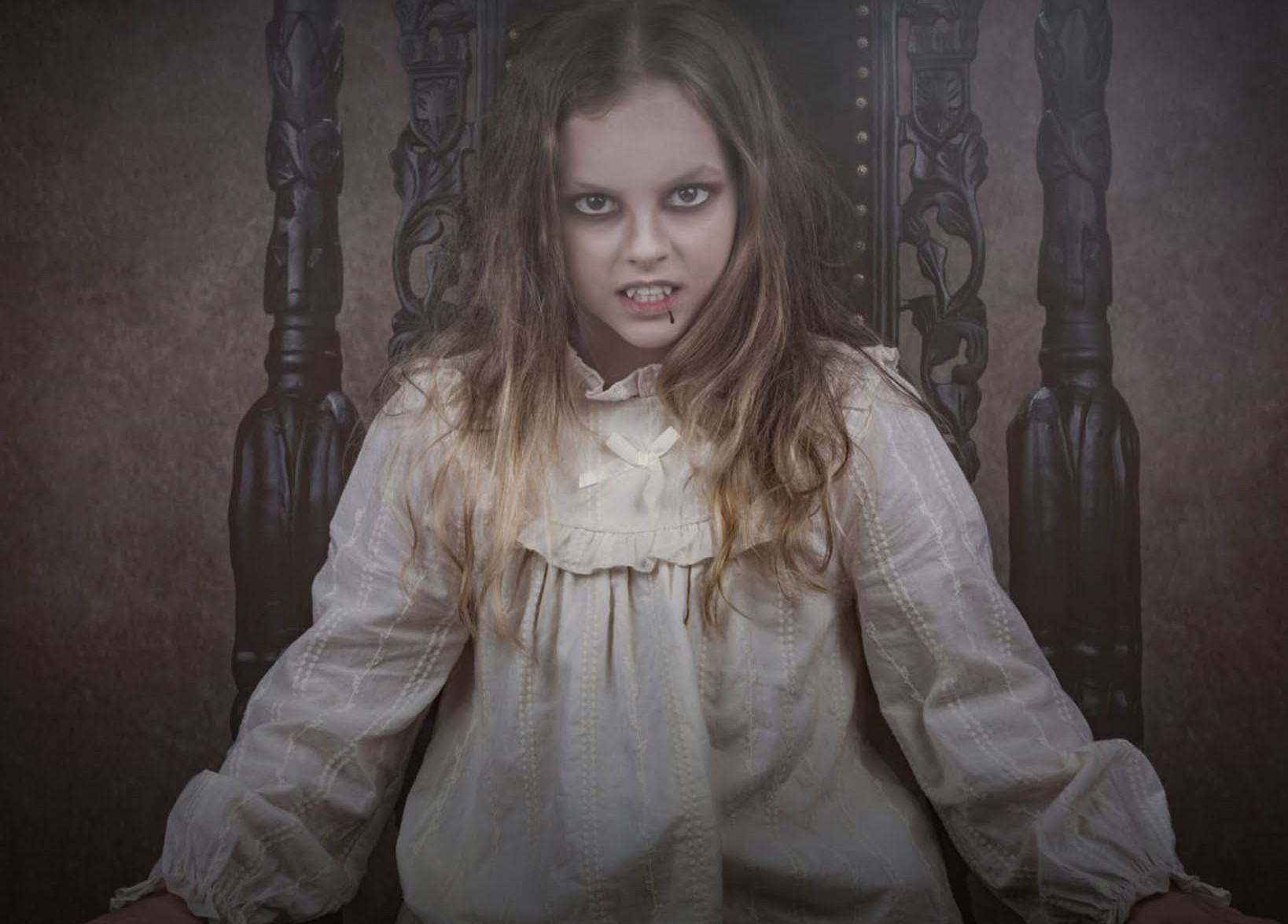
The rehearsal I attended gave just as much attention to the physical aspects of the horror. At one point, Alynta Scott, who plays Lucy, was carefully working through the logistics and movement of a bite. Vampirism requires choreographic direction too. Nearby, Rhys Schwarten as Renfield rehearsed with Alex Andrews, who plays the Child. Having a child performer woven into scenes immediately makes the situation more intriguing and raises the stakes.

Warner had only recently seen some of the blood effects when we spoke. “I just absolutely gasped.” Fake blood bags were on every table at rehearsal, waiting patiently for their chance to ruin somebody’s costume. Warner’s own costume includes a heavy, high-quality velvet cape that looks suitably extravagant and very fun to sweep around the stage in. The production isn’t holding back on practical effects either. There will be prosthetics, transformations, physical fights, gore effects, and one performer handling combat while on stilts.
Who put this bloody thing together?
Along with producing and directing, Yasmin Elahi has designed the set, costumes, and lighting, while the wider team tackles choreography, combat, makeup, effects, sound, and the puzzle of getting an ambitious horror production onto an independent theatre budget. The cast and creatives have been working from shared mood boards and visual references so they’re all inhabiting the same version of Stoker’s world. “We’ve really worked on the aesthetics,” Warner says. “We’ve done a lot of inter-relational work between the characters.”

I’ve seen Ghostlight’s past four productions, so I’ve had a pretty good look at the sort of theatrical worlds this company likes building. Their production of The Exorcist remains one of the very few straight horror productions I’ve seen onstage, and I still think about it often. Horror has a different set of toys in a theatre than it does on screen. There’s no camera choosing exactly where you look, no edit to cut away at the right moment, and whatever awful thing is happening is usually only a few metres from your seat.
This also happens to be one of several Dracula productions appearing on local stages this year. So, why should audiences make the trip to Beenleigh for this one? For Warner, part of the answer is simply how rarely we get to see horror onstage. “Horror is so seldom done on stage,” he says. “I can only really think of The Woman in Black off the top of my head, and this is adapting a very well-known classic specifically for the stage.”

Warner is hardly new to performing either. After years of stage work across almost 100 productions, he arrives at Dracula with plenty of experience behind him, plus a lifelong affection for the character. He’s equally enthusiastic about the people doing it with him. “The cast are phenomenal,” he says. “I’ve worked with many of the cast before and can testify to their hard work and their ethic, and just how good they are to work with.”
I only saw two scenes, but there was already plenty happening before the production had put all its teeth in. When I asked Warner to sum it all up, his answer was simple: “Ambitious.”
He paused and added, “Dude, I hope it’s good.”
With only four performances, audiences won’t have long to find out!
Photography: Christopher Sharman
Tickets available here: https://www.trybooking.com/events/landing/1579528
Please note: This show contains strobe lighting, loud noises, horror themes, violence, blood and gore, simulated nudity and simulated firearms. Recommended for audiences aged 16+.


Comments