


REVIEW: Homegrown - Loose Tooth Theatre, PIP Theatre
Updated: Jun 25

Homegrown
Presented by: Loose Tooth Theatre as a co-production with PIP Theatre
Writer: Sarah Esser
Co-Directors: Annabel Gilbert and Grace Longwill
Set and Costume Designer: Scarlett Hughes
Lighting and Vision Designer: Charlii Lobley
Sound Designer: Annabel Gilbert
Puppet Fabricators: Sarah Esser and Grace Longwill
Photography: Annabel Gilbert and Sarah Esser
“Every relationship has a gardener and a flower.”

I've accidentally sent enough houseplants to the great garden in the sky to understand their dramatic nature. However, it wasn't until seeing Homegrown that I considered they might also be emotionally manipulative.
Presented by Loose Tooth Theatre at PIP Theatre, Homegrown is a 90-minute play blending dark humour with unsettling strangeness. It begins in the painfully realm of infertility and relationship strain, then sprouts into something closer to The Exorcist: Bunnings Edition. Written by Sarah Esser and co-directed by Annabel Gilbert and Grace Longwill, the play creeps between relationship drama, psychological thriller, magical realism, and botanical horror.
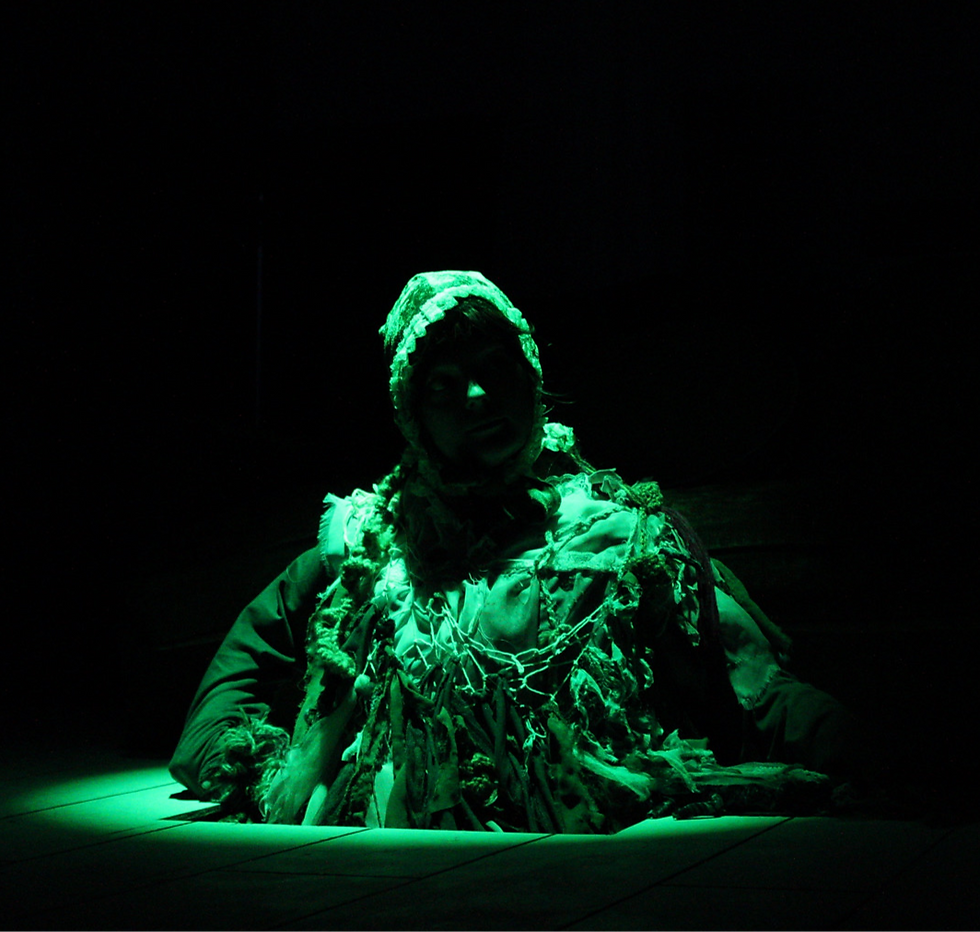
The story follows Tash and Sophie, a couple who share a home, a life, and a semi-successful gardening publication. After eight failed cycles their dream of motherhood has curdled into sorrow and exhaustion. When Sophie’s latest attempt fails, Tash wishes to close this chapter move on, while Sophie is not ready to give up. When a spilled fertility drink mixes with a mysterious plant spray, something starts sprouting beneath their floorboards. Tash assumes it's a weed and wants it gone. Sophie, still grieving and drawn to the possibility of new life, pleads to study it instead. Before they know it, the plant is growing faster than a teenager's appetite and becoming more like an overbearing roommate with zero regard for boundaries!

At the centre of the play were two vulnerable and physically demanding performances from Geena Schwartz and Billy Fogarty. Tash was supportive and practical, but underneath, her life was a compost bin of unresolved messes. She was carrying religious trauma, nightmarish premonitions, sensual dreams about the overtly sexual postman, and the tension between her queer identity and her mother’s faith. Schwartz had to let all that inner chaos spill out through voice modulation, choking, gagging and stage combat, and she made every bit of it seem truly connected to Tash’s fear and frustration.

Fogarty was equally strong as Sophie: a loving partner, wounded, stubborn, and consumed by the desire to have a family. As a character with a doctorate in botany whose world was built around growth, the infertility carried an especially cruel irony. Fogarty captured the frustration and devastation of that with painful accuracy, especially in lines like, “I wanted so bad to follow the rules of my own biology. To think nature has got my back.” Both Schwartz and Fogarty gave realistic intimacy, arguments, breakdowns, and frightening screams of trauma. Their performances had that awful recognisable rhythm of two people who love each other, but have been stuck hurting in the same pattern for too long.


The Plant, played by Indiah Morris, was a standout stage creation. Painted green and bonneted, it looked like a curious baby straight from Whoville. Morris had such particular physicality in her movements — toddling, crawling, tripping, and observing everything with wide eyes. The way she played it was both cute and unsettling. The costuming and puppet fabrication were well-crafted too, subtly evolving scene by scene as the Plant claimed more space in the house.
The Plant was not scary in a “feed me, Seymour” kind of way. At least, not at first... It was a reflection of what both women desired and dreaded. For Sophie, it offered a sense of motherhood, attachment, and nurture. For Tash, it became an invasive sickness, a poison pushing her toward psychosis. The Plant was not inherently harmful; it was more like an infant: needy, grabby, and amoral.

Oscar Thelander brought great comic contrast as the Postman, strutting in with an aggressive commitment to package delivery. His scenes interrupted the domestic tension, allowing Homegrown to explore farcical elements amid the heavier themes.
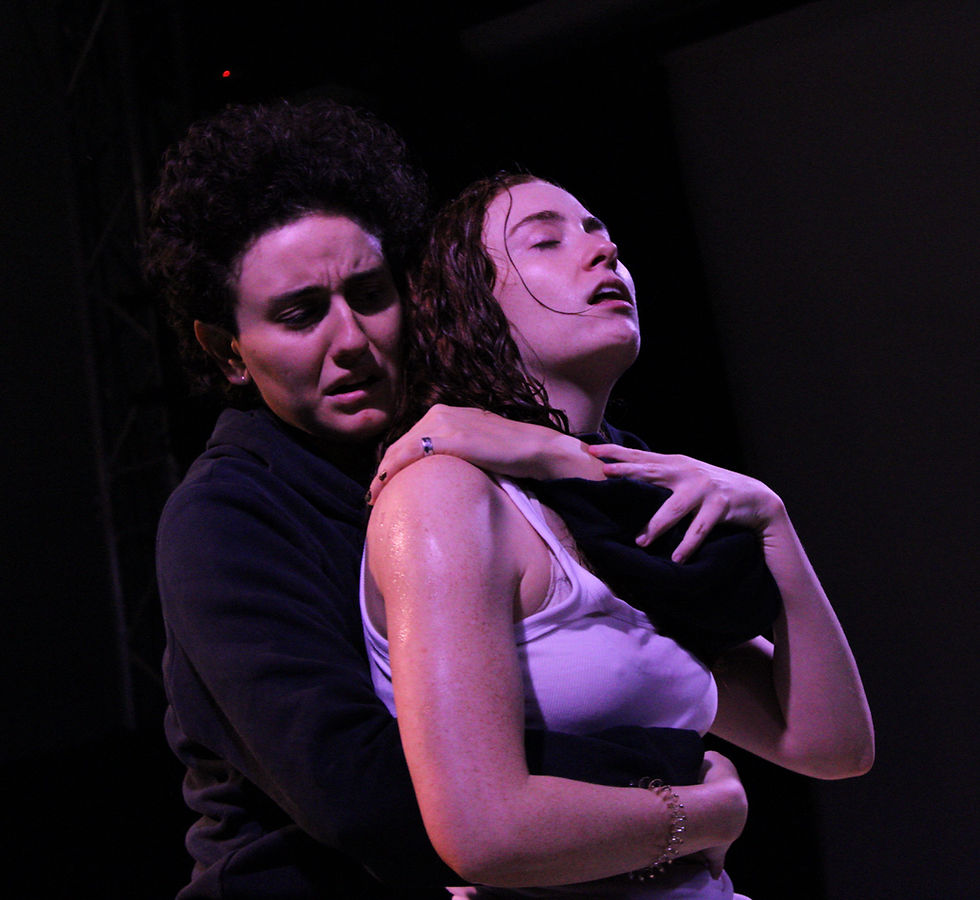
The writing captured the exhaustion of fertility treatment with brutal simplicity: “Run all the tests, rack up all the costs, and then… nothing.” That line sums up so much of the play’s emotional terrain: the endless tests, money, hope, routines, humiliation, and feeling abandoned by nature while others seem to bloom. Homegrown took that pain and externalised it into something impossible to ignore.
Scarlett Hughes's set design features an expansive lower and elevated stage with a dollhouse, tattered couch, and plant décor, and an underlying hollow space that gave the whole thing a secretive, rotting-under-the-surface quality. The dollhouse was a clever visual metaphor too: a mini version of the perfect home they desired, while their real home grew feral around it. Multimedia elements, including videos, graphics, and sound, conveyed a sense of reality distorting and glitching. Charlii Lobley's lighting and Annabel Gilbert's sound design make the home feel progressively unstable.

Homegrown kept diverting expectations, beginning as an intimate relationship drama before twisting into something stranger, bloodier and much harder to categorise. It dug into infertility, grief and sacrifice, while still making room for wit, imagination and bold choices. It was a curious little beast of a play and it trusted the audience to follow it all the way into the garden shed of emotional doom.


rophim hôm trước mình thấy bạn bè nhắc hoài nên ghé thử cho biết, kiểu vào xem có dễ dùng không chứ chưa định xem lâu. Vừa mở ra thấy giao diện khá gọn, nhìn không bị ngợp chữ hay rối mắt, lướt vài cái là nắm được chỗ nào là phim mới. Mình thích nhất là họ để nhãn Vietsub với HD 4K ngay trên thumbnail, khỏi phải bấm từng phim rồi mới biết chất lượng. Tìm thử vài tựa cũng thấy phản hồi nhanh, chuyển mục không phải chờ lâu. Nói chung cảm giác “vào là dùng được” chứ không phải mò mẫm, và mấy tag Vietsub + HD 4K nằm ngay trên khối hiển thị phim nên…
Mình coi soi cầu chủ yếu để giải trí, kiểu đọc cho biết rồi tự so với linh cảm của mình thôi. Trúng thì vui một chút, còn sai cũng chẳng buồn mấy vì mình không đặt nặng chuyện thắng thua. Gần đây thấy nhiều người nói về chọn dàn theo chu kỳ, nghe cũng có lý nhưng mình vẫn nhắc bản thân là số liệu cũ không phải lúc nào cũng lặp lại y chang. Mình có lướt vài bài trên soicauxsmb.pro, thấy họ viết khá dễ hiểu, nhất là đoạn giải thích vì sao nên loại bớt vài cặp. Dù vậy mình vẫn thích tự ghi lại và theo dõi xem nhận định nào ổn định hơn theo…