


REVIEW: Jesus Christ Superstar - Redcliffe Musical Theatre
Jesus Christ Superstar – Redcliffe Musical Theatre
Music and Lyrics by: Andrew Lloyd Webber and Tim Rice
Presented by: Redcliffe Musical Theatre at Redcliffe Entertainment Centre
Director/Producer: Madeleine Johns
Assistant Director: Zahlee Brackstone
Musical Director/Conductor: Rhonda Davidson-Irwin
Band Leader/Guitar: Lachy Stewart
Choreographer: Jill Lazuta
Set Design: Jonathan Johns
Lighting Design: Jacob Olsen, Chris Walker, Madeleine Johns
Sound Design: Andy Weldon, Angus Pitman
Costumes: Vanessa Hall, Erickson Ilustre, Madeleine Johns
Photography: Bruce Redman, Christopher Sharman

"Why are you obsessed with fighting times and fates you can't defy? If you knew the path we're riding you'd understand it less than I."

Andrew Lloyd Webber and Tim Rice’s 1970 rock opera is intense, vocally demanding and relentless; essentially two hours of continuous singing, soaring guitars and emotional confrontation. It is not an easy show to pull off, which made Redcliffe Musical Theatre’s ambitious production all the more impressive to watch. Having seen Superstar several times over the years, I always find it fascinating to see how each production tackles the sheer scale and stamina required by the score.
So naturally, the first thing that grabbed my attention was the band. Perched on stage like rock ’n’ roll royalty, they tackled the famously tricky rock score like seasoned pros. Led by the dynamic duo of Musical Director and Conductor Rhonda Davidson-Irwin and Band Leader Lachy Stewart shredding on guitar, the musicians gave the show its driving heartbeat. Superstar lives and dies by its music, and this band knew exactly what they were doing. Electric guitar riffs cut through the theatre beautifully, while moments of flute added lyrical softness. The score is demanding, but the musicians handled it with impressive stamina. By the end I felt like they deserved a hot tea and a lie down.

Visually, the production embraced a modern industrial aesthetic. Jonathan Johns’ set centred around scaffolding structures and a raised plateau which transformed later into the crucifix itself - a striking image when it mechanically rose up. Combined with the haze and dynamic lighting design from Jacob Olsen, Chris Walker and Madeleine Johns, the stage was always sculpted by beams of light and colour, heightening the emotional moments and giving the show a strong visual identity.

Choreographer Jill Lazuta jazzed up the ensemble with sharp, energetic movement. The group numbers had fun with contemp and hip hop influences, particularly in “What’s the Buzz”, where the followers moved in tight formations and layered canon sequences that grew from a handful of people into a surging crowd. The ensemble worked hard throughout the show, maintaining the momentum required in a sung-through musical where the story rarely pauses.

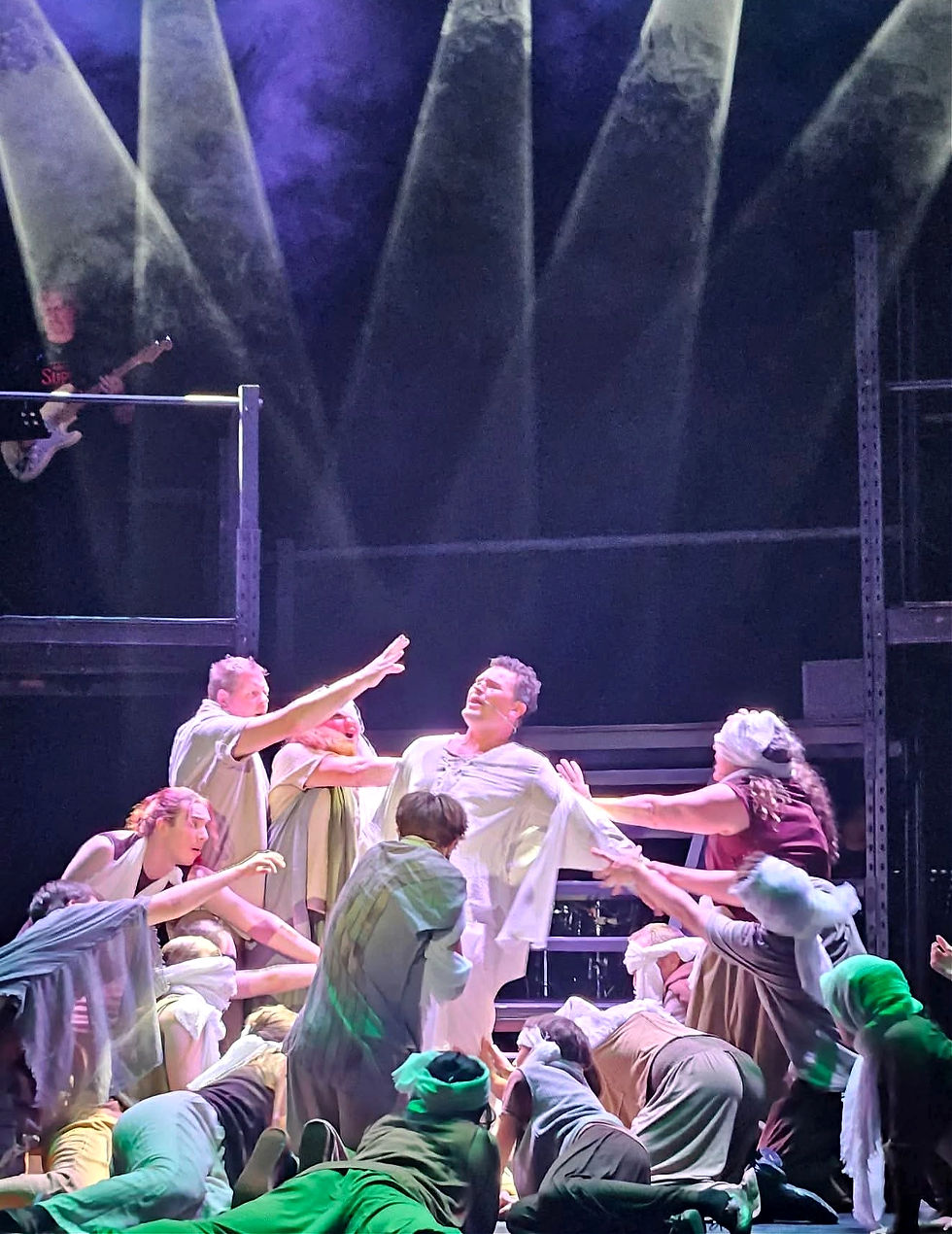
In the spotlight we had Jeandré Le Roux as Jesus, belting out tunes like a rockstar at a heavenly karaoke night. His timbre had a stunning classical musical theatre clarity that soared through the score, first evident in his angelic rendition of “Poor Jerusalem”. His standout moment came during “Gethsemane”, of course, where the combination of haze, dramatic spotlights and his expressive performance created one of the show’s most gripping scenes. The famously punishing high notes landed with awe, drawing a very audible reactions from the audience - a kind of collective “Did we just witness a miracle?!"

Erickson Ilustre brought fierce energy and vocal power to the role of Judas. Arguably the emotional engine of the show, Ilustre embraced that fury and desperation. His delivery in “Damned for All Time” was particularly strong, navigating the rapid fire lyrics with impressive clarity while the electric guitar ripped alongside him. His portrayal of Judas’ demise (spoiler alert ha!) captured the character’s turmoil and guilt. In the intensity of the moment some of the lyrics became difficult to catch, but his emotional storytelling got the point across.


Stephanie Collins as Mary Magdalene provided a beautiful emotional counterpoint to the storm around her. Her voice had a gentle, angelic quality like a lullaby. Her solo moments were delivered with sincerity and warmth, particularly when she stepped downstage to sing directly to the audience for “I Don’t Know How to Love Him”, drawing us into Mary’s blanket of compassion and confusion. A microphone issue during “Everything’s Alright” meant her voice did not cut through as clearly as it deserved, but Rhonda’s flute accompaniment was absolutely gorgeous there.

The Pharisees strutted onto the stage with an air of ominous doom. Steven Eggington’s Caiaphas delivered a truly resonant low bass that vibrated through the theatre, while Anthony Van Stam as Annas matched him with an exquisite vocal presence of his own. Their scenes together created an imposing wall of sound, especially when supported by the intense offstage gospel style chorus proclaiming “Crucify him!"
Lucas Van Stam injected joyful energy into “Simon Zealotes”, complete with cheerleader-at-church style choreography by the ensemble.

Jake Hollingsworth as King Herod leaned fully into the character’s outrageous theatricality. His flamboyant accent, playful sass and flapper backup dancers made “Herod’s Song” the most entertaining moment of the night. Honestly I was wishing he had a crown to top off the look. If you are going to be that fabulous, you might as well go all in!
Vocally, the production delivered many impressive moments, particularly from the apostles' harmonies in "The Last Supper". However, in a show that is essentially wall to wall music, clear and purposeful staging becomes crucial. At times the blocking felt a little sparse, leaving performers with plenty of stage to roam but not much to do. For instance, “The Temple” is often staged as a chaotic explosion of movement like a casino floor, yet here it felt more contained than expected. Or when the lepers crowd around him, I expected Jesus to appear more overwhelmed by the chaos than he did. There were also a few dramatic moments that could grow further with stronger physical reaction. During the 39 lashes scene the emotional stakes would have felt even stronger if Jesus’ physical response had matched the brutality being implied.
The title song “Superstar” had the cast grooving with its boogie-style moves and disco ball. Ilustre as ghost-Judas rocked a memorable red leather outfit, but spent much of the number addressing Jesus rather than the audience, which made the energy feel slightly inward for such a big show-stopping moment. It's the kind of number that practically begs the performer to play directly to the crowd, not just to the Son of God. But at this point, I am just nitpicking as a result of being cursed to have seen Superstar enough times to develop strong opinions about biblical staging logistics, apparently.
Jesus Christ Superstar is a challenging show for any company to mount. It demands vocal stamina, emotional intensity, strong musicianship and clear storytelling, often all at once. Redcliffe Musical Theatre approached the material with ambition, musical strength and clear respect for the iconic score. With a talented cast, a rock solid band and striking visual elements, this production delivered many memorable moments from a musical that continues to dazzle more than fifty years after it first shook the musical theatre world.


Comments