


REVIEW: Sister Act - Savoyards

Sister Act Presented by Savoyards
Director: Andrew Cockroft-Penman
Cultural Consultant: Matthew McKenzie
Musical Director: Sally Faint
Choreographer: Natalie Lennox
Lighting: Gabrielle Burton
Sound: Ethan Houley/David Sowdon
Costume Design: Kim Heslewood
Wig, Hair and Makeup: Lynne Swain
Photography: Sharyn Hall
“You mean I gotta go incog-negro?”
Sister Act is like that one friend who shows up to a low-key dinner party with a karaoke machine. Inspired by the beloved film, it tells the tale of disco diva Deloris Van Cartier, whose life takes a wild detour when she witnesses a murder and is placed in witness protection at a convent. Suddenly, she's a nun in disguise, navigating a world of strict rules, routines, and a no-nonsense Mother Superior. But when Deloris gets her hands on the struggling choir, she does more than just change their tune.

Rudo Banya steps into Deloris Van Cartier like the spotlight has been personally waiting for her. She has the sass, glamour, and quick-fire reactions the role needs, along with a wonderfully funky voice that sits right in the groove of the disco-driven score. Her Deloris knows exactly how to hold a room, whether she is chasing fame, dodging danger, or trying to survive convent life without completely losing patience. As the show goes on, Banya lets Deloris soften without losing her sparkle, which makes her bond with the sisters feel earned, not just inevitable.
As Mother Superior, Beth Lowe is one of the production’s great pleasures. She runs on dry humour, restraint, and the permanent expression of a woman that is one more tone-deaf hymn away from snapping. Lowe never has to push too hard for laughs; so much of the comedy comes from watching her try to remain holy while Deloris causes spiritual and musical mayhem around her. “I Haven’t Got a Prayer” is one of the strongest numbers for me. In a score full of big group numbers, this quieter solo cuts through because of Lowe’s control, clarity, and beautifully measured frustration.


Wednesday Reign is lovely as Sister Mary Roberts, giving her that gentle, soulful quality of a wallflower used to shrinking into the background. When she finds her voice in “The Life I Never Led,” it is like watching a caterpillar transform into a butterfly. It is a beautiful turning point, and Reign gives it sincerity, stillness, and a voice that immediately stands apart. It is hard to describe without reaching for the usual reviewer clichés, but there is something truly unique about her sound; you want the whole convent to stop and listen.
Emma Brack attacks Sister Mary Patrick with the terrifying optimism of someone who has never once considered being chill. She leads “It’s Good to Be a Nun” with absolute conviction. The number is tight, well-rehearsed, and full of character from all the sisters. Helen Beauchamp and Constanza Acevedo Burckhardt also make the most of their featured moments, and across the ensemble, the nuns each have their own little pockets of personality. By the time Beauchamp is roller skating, cheerfulness has officially exceeded convent speed limits.

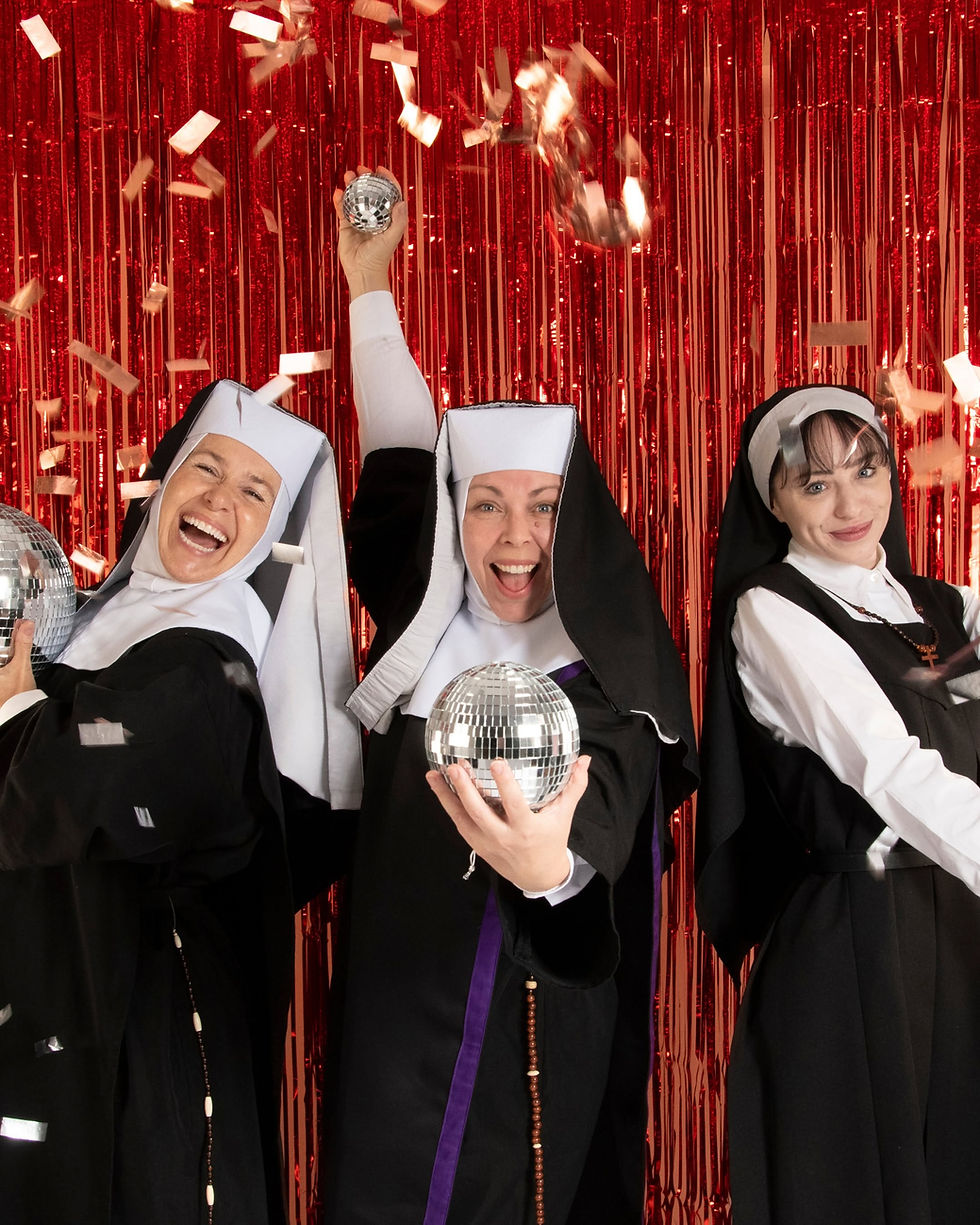
That is one of the joys of this show: it gives so many women room to be more than background figures. Every time the sixteen nuns shuffled on, I found myself scanning the group to see who was doing what. Watching them evolve from heartfelt but hopeless choir to glittery disco divas is great fun. “Raise Your Voice” captures that charming stage where confidence precedes before perfection, and the sparkly wimples are the kind of whimsical, fabulous design choice I expect from this show.

Lachie Gleadhill delivers a highly natural performance as 'Sweaty' Eddie, complete with an authentic Philly cop accent. He finds the sweet spot between nervous, hopeful, and painfully uncool. “I Could Be That Guy” is especially fun because Gleadhill starts with an intentionally lacklustre vocal delivery, then lets the number burst into a vibrant disco fantasy where his actual voice gets to shine. It shows us exactly who Eddie wishes he could be, helped along by groovy ensemble choreography and a great lift from the orchestra percussion.
Warryn James shines as Monsignor O’Hara, balancing church respectability with just enough theatrical flair. He captures the church’s growing excitement as the choir moves from humble parish ensemble to accidental religious girl group. Lonnie Toia nails the gang boss presence for Curtis, rocking the perfect look and voice like he was born for the role. He keeps the threat of the story present while still fitting into the musical’s comic world. “When I Find My Baby” is a fun villain number, especially with his three minions backing him up in perfect harmony.
William Chen is a standout among the trio as TJ, bringing big comic commitment and strong dance ability. Together with Joshua Langdon as Joey and Montil Djumapili as Pablo, they turn “Lady in the Long Black Dress” into a super fun disco break, packed with falsetto, swagger, and some unserious romantic strategies.

The band, led by Musical Director Sally Faint, does excellent work with Alan Menken’s score, giving it the rhythm, groove and disco pulse it needs. The cast has strong solo and featured vocal moments, especially from Banya, Lowe, Reign and Gleadhill. Some of the larger group vocals could still tighten in blend, particularly when harmonies sit underneath movement or dialogue, but you can feel the cast throwing themselves into the score. If there was one area that needed a little more heavenly intervention on opening night, it was sound. The eternal battle! And to be fair, this is a nightmare of a show to mix, with what appears to be every single person wearing a mic.

Natalie Lennox’s choreography has a lot of fun with the show’s disco world, pulling from Motown, funk, girl-group, gospel performance style, and a few hip hop touches in the nun choir version of “Take Me to Heaven.” The cast handles a lot of movement across the night, and the nuns in particular have impressive stamina. “Sunday Morning Fever” has strong drive and staging, although some of the dialogue underneath is difficult to catch.
Visually, the production has some striking moments. The set design by Savoyards Team and scenic design by Kaitlin Hague, with stained glass windows, bar setup, fringe glitter curtains, neon signage, neon cross, and disco ball, all help build the contrast between sacred space and showbiz excess. Gabrielle Burton’s lighting adds plenty of colour or heavenly spotlights. Kim Heslewood’s costumes and Lynne Swain’s wig, hair, and makeup design do a huge amount of work in selling the 1970s world full of sequins, afros, sparkly boots, and even sparkly wimples. There are endless wigs in this production — truly, an entire spiritual journey in synthetic hair!

Director Andrew Cockroft-Penman leans into the fun of that clash: disco confidence crashing into convent discipline, nightclub sparkle meeting Catholic restraint, and Deloris landing in a place where “blend in” is very much not her natural setting. The pace is snappy, and the big scenes are busy without tipping into chaos. Except for the convent chase scene, of course, which is a comedic whirlwind of staged mayhem. Having Matthew McKenzie credited as Cultural Consultant adds value, given the story is set in 1970s Philadelphia and brings together Black disco culture, Catholic settings, and the social dynamics of Deloris suddenly disappearing into convent life.
In the end, Sister Act is about sisterhood, community, courage, and the terrifying but wonderful act of stepping forward and letting yourself be heard. Savoyards’ production has plenty of sparkle, plenty of heart, and enough nuns in glittering headwear to make even the most reluctant churchgoer consider joining the choir.


Comments